Wednesday, January 23, 2008

Sortes Thoreaianae

I cracked open I to Myself, an annotated selection from Thoreau’s journal, for a random bit of wisdom last night, little thinking it would lead to an intriguing form of divination. That’s right, fortune-telling.

I chanced on page 116, which included an entry from December 12, 1851, in which Thoreau recounts a conversation (argument?) he had with Emerson over Margaret Fuller’s “whims and superstitions,” which apparently included the belief that randomly opening a certain text and placing one’s finger on a passage could result in an oracular reading pertinent to forthcoming events. One of her favorite texts for this purpose, presumably, was Virgil’s Aeneid, thus Sortes Virgilianae. Thoreau scoffed at the notion, but Emerson held that her experience “warranted attaching importance to such things”. An annotation to the passage included the following remark about Fuller from a memoir Emerson wrote concerning her: “I think each new book which interested her, she was disposed to put to this test, and know if it had somewhat personal to say to her.”

I must confess the idea holds a certain amount of charm. Emerson didn’t argue divination of the sortes sort would be effective for all, but required a certain aptitude or orientation. I couldn’t help remarking the passage which immediately preceded this account, written by Thoreau on the same day.

I wished to ally myself to the powers that rule the universe. I wished to dive into some deep stream of thoughtful and devoted life, which meandered through retired and fertile meadows far from towns. I wished to do again, or for once, things quite congenial to my highest inmost and most sacred nature, to lurk in crystalline thought like the trout under verdurous banks, where stray mankind should only see my bubble come to the surface. I wished to live, ah! as far away as a man can think. I wished for leisure and quiet to let my life flow in its proper channels, with its proper currents; when I might not waste the days, might establish daily prayer and thanksgiving in my family; might do my own work and not the work of Concord and Carlisle, which would yield me better than money.

Could this be an oracle favoring Sortes Thoreaianae? Further investigation seems warranted...

Kate in Italy

Our niece Katelyn, an art history major at KU, is spending a semester in Italy and France this winter — an opportunity of a lifetime. She is an accomplished photographer and her brother Miles has created a ShutterFly account for her so she can share pictures with family and friends.

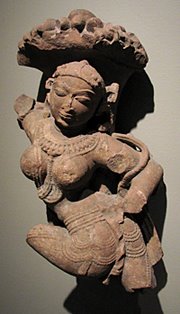
Here is one of Kate’s pictures, taken I believe in Florence or Sienna. (Hint: This statue looks remarkably like Kate, only, somewhat less lively of course.)

Wednesday, January 16, 2008

Oceanic References

The following are a couple of interesting references I came across in Google Books. The first item includes a detailed discussion of the correspondence between Freud and Romain Rolland which Comte-Sponville refers to in his comments about oceanic feeling, a term apparently coined by Rolland.

The Enigma of the Oceanic Feeling by William B. Parsons.

Mystical Encounters with the Natural World by Paul Marshall.

The Book of Lost Things

I finished reading The Book of Lost Things by John Connolly last night, Tuesdays being one of our dedicated reading nights in 2008 (a New Year’s resolution). The story, which takes place in England during World War II, concerns an adolescent boy named David whose mother dies of cancer. Shortly thereafter, books begin talking to David, literally, and he starts having blackouts which prompt his father to send him to a psychologist. Psychology manuals in the doctor’s office give a running commentary on his analysis, which, of course, only David can hear. The commentary devolves into insults when they believe the doctor is wrong. A book by Jung literally hurls itself from a bookcase in disgust at one point, startling the doctor, and providing the single humorous episode in an exceedingly grim story.

David soon finds himself drawn into a world of fairy tales given dark, and one must say, adult interpretations. Once there he is pursued by man-wolfs (hint: Red Ridinghood gets a significant rewrite), and an even more sinister character, the Crooked Man. The story proceeds predictably, ending with an anticlimactic and oddly saccharine conclusion.

The characters are flat and uninteresting excepting only David’s father and his second wife, who are peripheral to the tale. David himself is neither believable nor engaging. Apparently casting the story as a tribute to lost innocence and entry into adulthood, the author seems to have missed the obvious point that a mature understanding of the world involves years of real life experiences, not something generally accomplished by a young boy during a sojourn of several weeks in a fairy tale. No matter how twisted.

For a similar, but more adroitly told and compelling story, try Clive Barker’s The Thief of Always. Barker’s tale, unlike Connolly’s, is suitable for younger readers.

Thursday, January 10, 2008

Oceanic Feeling

The Little Book of Atheist Spirituality by André Comte-Sponville. I spent a good deal of time with this book in the first week of 2008, yet have hesitated to post an entry about it and the reason why gets at the difference between a blog and a personal journal. Or at least the difference to me.

I keep a personal journal, a habit I picked up when I started in seriously with astronomy. This at first was simply a means to record the objects I found and observed with my telescope, but from the beginning also included bits of this and that, like who my observing companions were and what antics they displayed. From there it was a natural step to record observations about birds, trips to state parks, our Grand Canyon vacation, and the like. I have occasionally included illustrations, at first astronomical sketches, which seems an unlikely thing to do at the telescope, in the dark, but is surprisingly rewarding and encourages one to look more carefully and enables one to recall specific detail even years afterward. But these journals are for myself. “I to Myself” as Thoreau said it, and while a few others have glanced at them, I never felt self-conscious about the contents, or felt inhibited about my expressions. And, to be honest, as time has passed, I have become reserved about permitting anyone, other than Elly, to look through them. Not that they contain anything to hide, but simply because they have become a private preserve to pursue my own thoughts, feelings, and ideas.

Blogs, on the other hand, are anything but private. Their intent is to immediately share the content with anyone on the planet who cares to take a peek. One puts oneself on display, which also puts one on guard, sacrificing a certain amount of spontenaity and freedom easily exercised in solitude.

Posts about books often read like reviews, rather than journal entries. It’s easy to adopt this style of writing, considering that your audience is likely to include your circle of friends and anyone else with similar interests and a slight knowledge of search engines. It seems necessary to include an overview of the book’s contents, an assessment of its strengths and weaknesses, and finally a recommendation whether to pick it up or pass it by.

After considering the matter for some days, it has occurred to me that I don’t want to review André Comte-Sponville’s book, but rather explore some of the ideas he presents and my own response to them, to delve into particular points that resonate with me.

Before continuing, I'll add that this is not the sort of book I read once and set aside. Instead, I find myself rereading passages and pondering them, dipping into a page or two here and there, being reminded of something in another book and digging that up, having some experience or fleeting thought or idea that brings me back to the book later for more reflection. In short, Comte-Sponville has joined a small group of writers whose ideas I value and respect and find inspiring. Having said that, I might as well refer to the author as André.

André discusses what he calls “oceanic feeling” in a topic of that name which is included in the book’s third section, “Can There Be an Atheist Spirituality?”. It follows a closely related topic, “Immanensity.” Throughout his book, André engages in word play, intended one supposes to be amusing and thought-provoking, which often takes the form of combining several words, as, in this case, "immensity" and "immanence." (I do find it amusing and thought-provoking.)

Spirituality has more to do with experience than thought; this is what distinguishes it from metaphysics. And whereas we have a conception of the infinite, we have no experience of it. We have an experience of the unknown (knowing we do not know), which itself is part of spirituality (the part I have chosen to call mystery). However, we also — and first, and especially — have an experience of immanence and immensity, which, following the poet Jules Laforgue, we can call immanensity. We are in the All, and whether it is finite or not, it surpasses us (goes beyond us) in every direction; its limits, if it has any, are permanently beyond our reach. It envelops, contains and exceeds us. Is it a transcendence? Not at all, since we are inside of it. It is an inexhaustible, indefinite immanence, whose limits are both undefined and inaccessible. We are inside it — we live within the unfathomable.


“We live within the unfathomable.” What an evocative and brilliant statement, acknowledging at once that the limits of the universe, which may or may not be infinite, nevertheless lie forever beyond our reach, and that experiencing the All and accepting its essential mystery without attempting to explain it, without, that is, God and religion, is a profound basis for spirituality.

I started this post intending to discuss André’s notion of “oceanic feeling,” but find now that I have said all I care to at present, so I’ll have to pick the subject up in a later post, which is something I never hesitate to do in my personal journal.

Something Cool at the Library

At the Kansas City Public Library (Plaza Branch) the other day I noticed a display of what are called Playaway books. These are unabridged books that come in a prepackaged MP3 player small enough to fit in your pocket. The library sells ear buds (the only thing not included) for $1.00. The controls are easy to use, enabling listeners to control volume, playback speed, flip between chapters, fast forward and reverse, and set a bookmark so the next session starts from that point. The video cassette style case the library bundles the player into even includes an extra AAA battery in case the battery in the player runs down. A librarian told me the Playaway audio books have just been added to the library holdings.

What a wonderful idea!

I checked out 1776 by David McCullough and Muhammad by Karen Armstrong. These are perfect for use in the car. Lots of titles are available. The Playaway site includes a catalog of titles, plus more information about the player. It appears that the Playaway site catalog is not comprehensive: it did not list Muhammad by Karen Armstrong, for example.

Saturday, January 5, 2008

Thank you, Susan and Rob!

Our new year resolution to visit with friends more often got off to a terrific start when we spent Wednesday evening with Susan and Rob Esson. Rob volunteered to cook an Indian dinner and made sure that all of the dishes except one (Nepalese fish) was vegetarian so that Elly could enjoy them. He cooked Aloo Gobi, dahl, eggs cooked over a delicious base of I’m not sure what, rice, the aforementioned fish, and a Rob speciality — exploding aubergine curry. Susan provided a tasty fruit crumble for desert. Elly and I supplied the wine.

Rob even braved the frigid conditions to cook the fish on their outdoor grill, putting on a fiery, pyrotechnic display with his wok.


Susan, Elly, Rob, and myself at the dinner table.

Susan, we learned, has illustrated a children’s book, One Heart with Two Homes, that will be available on Amazon January 8. Congratulations, Susan!